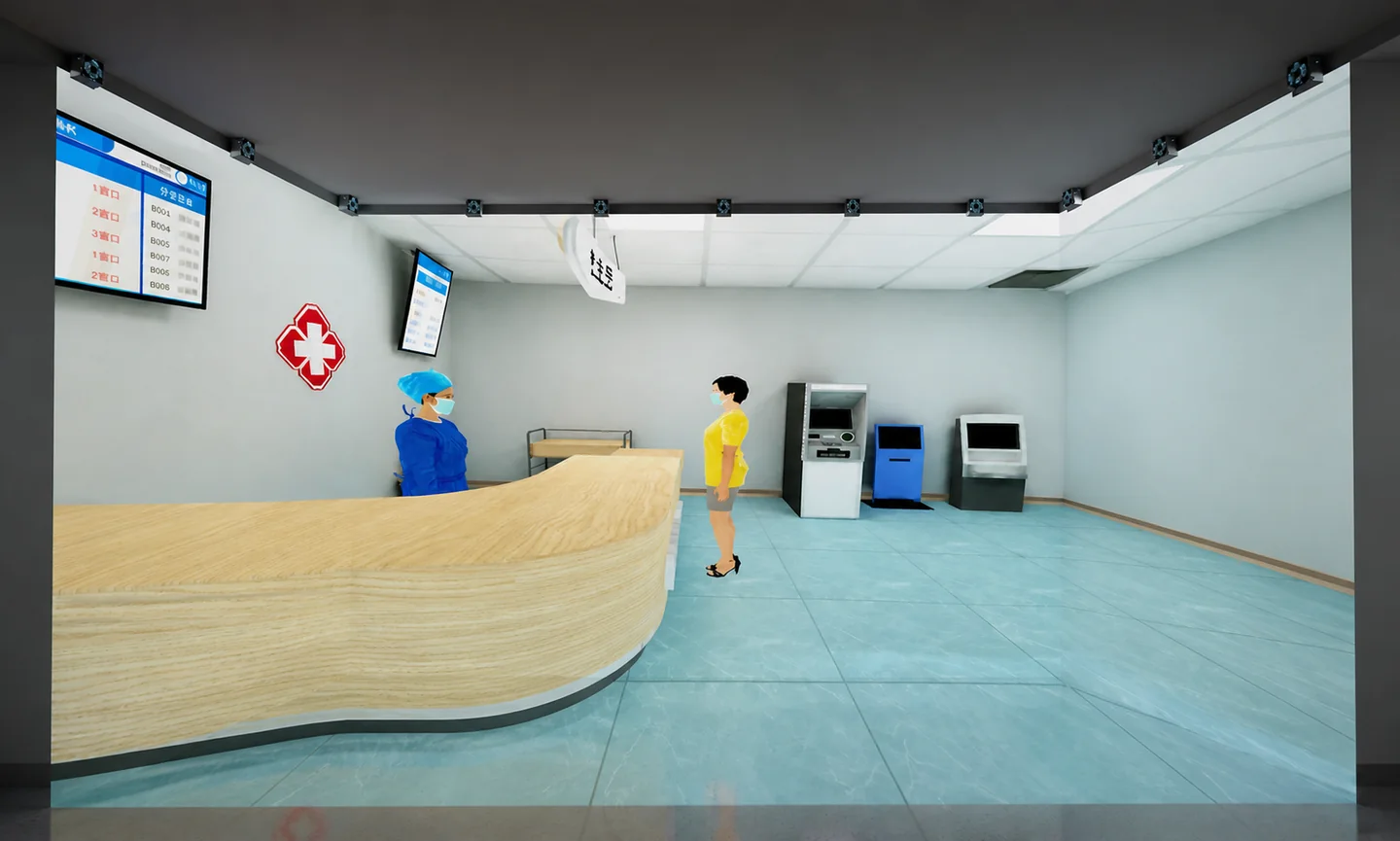
An international medical VR project is rarely just a software purchase. It combines curriculum, devices, languages, data interfaces and local delivery capacity. The safest starting point is to define who owns the client and site work, who builds the clinical content and software, and then establish shared standards through a bounded, independently acceptable pilot.

1. Identify the buyer, user and local delivery party
A university or hospital may contract directly, or a local education company, medical distributor or systems integrator may subcontract development to a Chinese team. In a three-party model, define who approves clinical content, supplies hardware and networking, installs and trains, and signs final acceptance.
Public-sector projects may also require supplier registration, local tender eligibility, bonds, tax documents or Arabic submissions. A Chinese development team can own a clearly separated software and content work package, while a locally qualified party confirms tender and site obligations.
2. Start with a small but complete pilot
A pilot should not be only a visual demo. Include a representative clinical workflow, target languages, agreed devices, instructor tools, process records and an executable acceptance script. Start with one full course or three to five scenarios, then decide whether to build a wider library.
Separate content production, software features, languages, device adaptation, multiplayer concurrency, integrations, deployment and support in the quotation. Hardware, import, site networking and travel should also be visible line items.
3. Freeze clinical content and localization ownership
Document learning objectives, roles, procedural steps, error feedback, scoring events and debrief content, then name the medical reviewer. A multilingual project also needs an approved glossary, subtitles, voice-over, right-to-left layouts, cultural context and a final sign-off owner.
Agree a change process: distinguish clinical corrections from new scenarios, rebuilt models or added device versions, with an estimate and approval path for each category.
4. Put platforms, data and deployment into scope
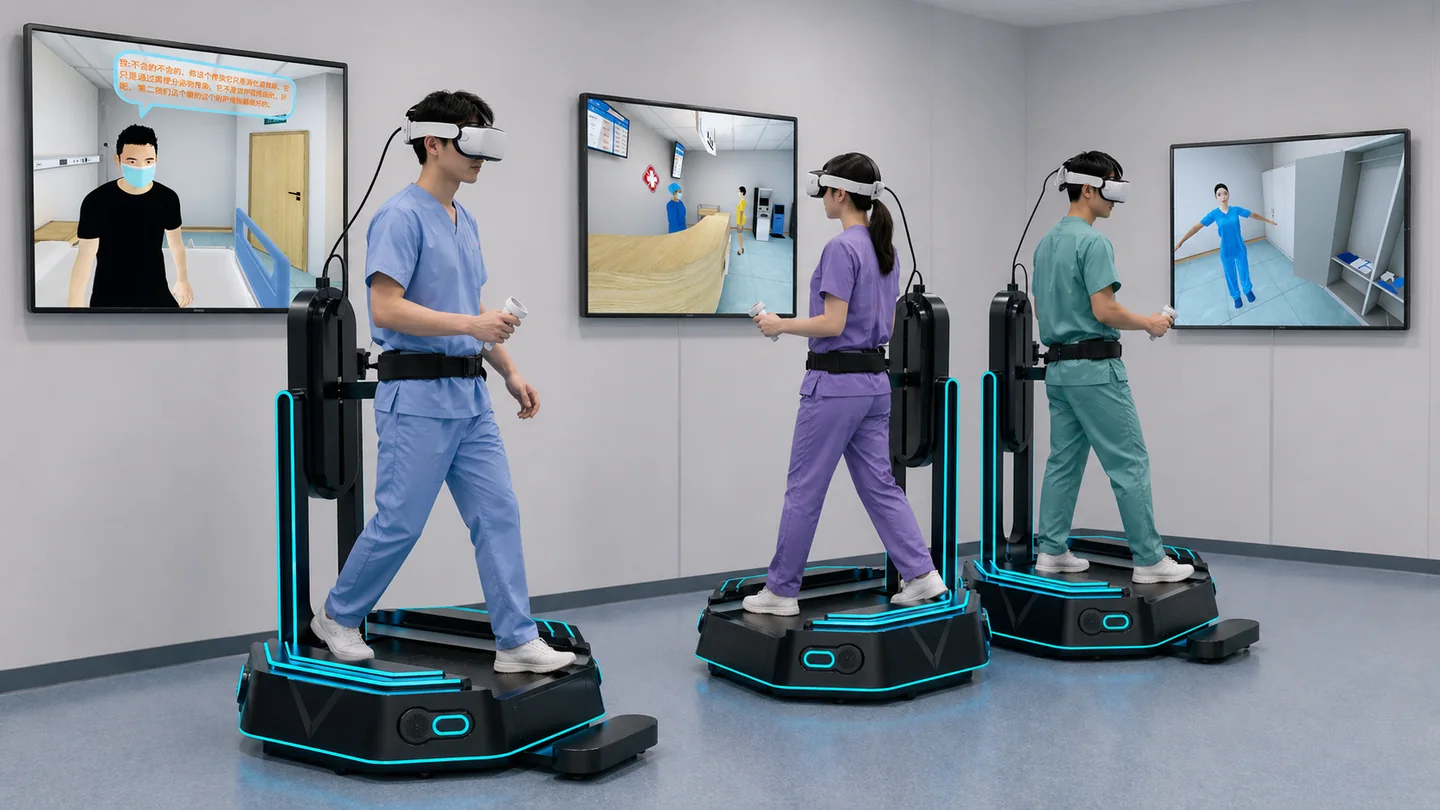
Name the headset, PC, CAVE or display models and system versions. Define single- or multi-user operation, concurrent users, reconnect behavior and scene reset. For LMS or account integration, provide API documents, a test environment, sample fields and authentication.
For hospitals and government buyers, confirm cloud, local-network or fully offline deployment, data location, administrator roles, log retention, backup and update methods. Avoid a vague promise that the product simply “supports integration.”
Choose the right cross-border delivery route
| Delivery route | Best fit | Confirm in the contract |
|---|---|---|
| Direct custom delivery | Universities or hospitals able to manage curriculum, devices and acceptance | Scope, milestones, integrations, deployment, IP and support |
| OEM / white label | Partners with their own brand, channel and service team | Branding, territory, source code, updates, client and support ownership |
| Local integrator subcontract | Projects requiring tendering, hardware installation and on-site support | Work split, tender documents, site responsibility, acceptance and payment flow |
| Staged rollout | Institutions that want evidence before funding a wider library | Pilot success criteria, later pricing, reusable assets and expansion schedule |
5. Choose direct custom, OEM or joint delivery
Direct custom delivery suits an institution that can manage content, devices and acceptance. OEM or white label suits a partner with a brand, channel and service team. Local-integrator subcontracting suits projects that need tendering, hardware installation and on-site support.
The contract should define branding, IP, source code or executable delivery, third-party licences, territory, client ownership, payment milestones, warranty, paid updates and treatment of project materials after termination.
6. Accept against deliverables and test results
Test the target devices, languages, role permissions, key tasks, score records, instructor control, concurrency, reconnect and reset behavior, plus integration data. Deliverables can include installers, deployment instructions, account and permission matrices, content lists, test records, manuals, training materials and known limitations.
Define support levels, response targets, remote versus on-site boundaries, upgrades, adaptation after device-system changes and the pricing method for future courses.
What to prepare for a project discussion
- Country, contracting buyer, end-user institution and local partner
- Curriculum list, clinical scripts, roles and named medical reviewer
- Languages, subtitles, voice-over, terminology and cultural adaptation
- Device models, concurrent users, venue, network and deployment
- Instructor tools, logs, assessment, LMS or SSO and data security
- Budget boundary, milestones, acceptance script, IP and support term